Is the Hippocratic Oath still relevant?
Perhaps we shouldn’t look to Apollo for guidance…
Some NHS doctors may have heard some mention of the Hippocratic oath from the public in response to their decision to take strike action.
However, we know that most doctors nowadays have never actually taken the Hippocratic Oath. Named after the ancient Greek physician Hippocrates, the oath was written as a guideline for physicians embarking on their medical careers.
But one glance at the Oath is enough to realise just how antiquated it is. For example, it begins with a promise to the ancient Greek gods Apollo, Asclepius, Hygiela and Panacea, some of whom are as relevant as they are easy to pronounce.
Whilst the Oath does get many things right, it prohibits surgery, mandates against treatments like chemotherapy and disregards patient autonomy and consent.
Considering that, the Oath isn’t quite the argument against the strikes that people may think it is. If the consequence of widespread discontent with working conditions and pay is for doctors to leave the country or the profession altogether, then perhaps the real risk to our patients is not taking action to make change.
So just for now, doctors may have to get on the wrong side of Apollo…
Weekly Prescription
"What we see depends mainly on what we look for"
Culturally competent and emotionally intelligent clinicians understand that what we read from a patient’s history, examination and investigations can vary significantly depending on their cultural beliefs and individual experiences.
For example, some have a very stoic response to pain, whilst others tend to vocalise it more openly. It is only when we deliberately appreciate this, can we use it to benefit our practice and our patients.
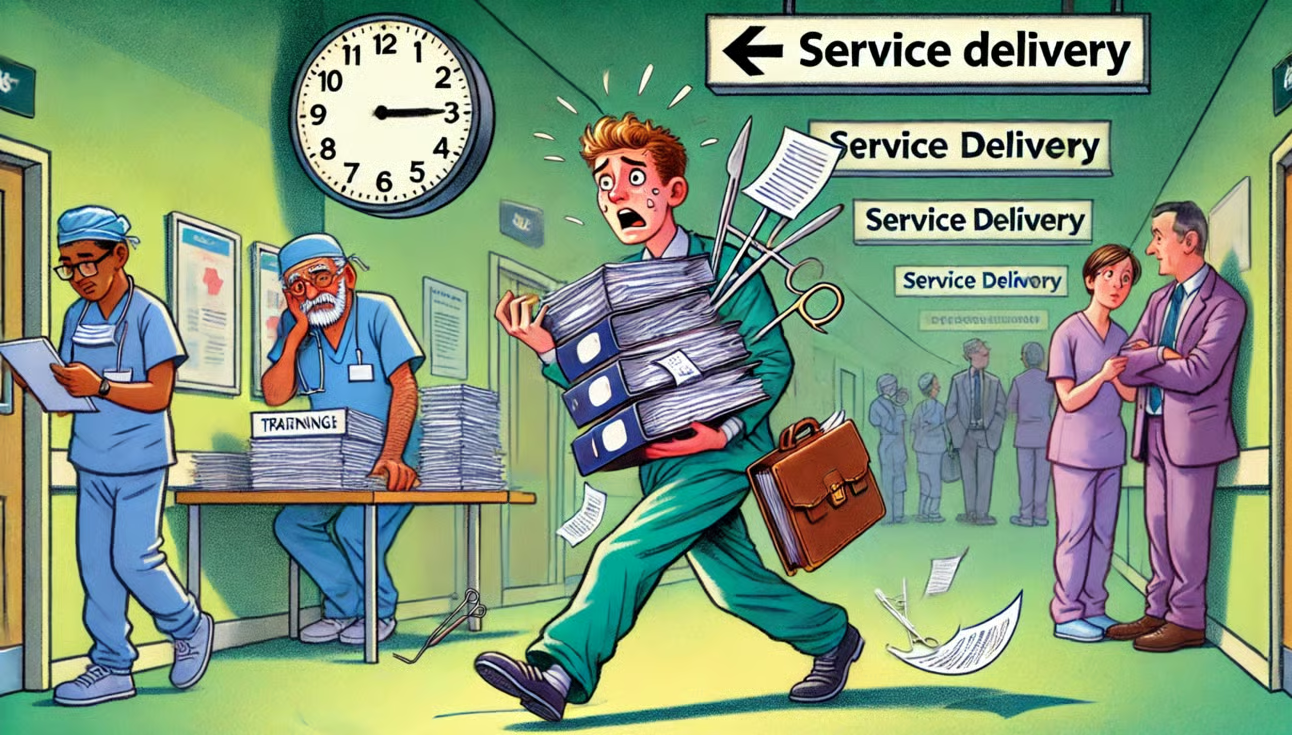
CST: Core Surgical Trepidation?
Core surgical trainees are worried. Year upon year doctors are spending increasing hours working on their portfolios in order to secure a space on competitive training programmes.
But has this come at the expense of developing surgical skills? It has been suggested that what trainees are doing today at junior registrar level was being completed by Senior House Officers a couple decades ago.
A Royal College of Surgeons’ report from 2016 showed that 60-80% of a Core surgical trainees’ time is spent on service delivery rather than training, and with the expanding role of physician associates, this limited training time left is potentially under threat.
But are they right to be worried?
Some say that passing the MRCS and having a robust and tailored portfolio is an indication that one is committed and willing to put in the work when it comes to higher training. Or in a similar vein, they may say that when it comes to surgical skills it’s not where you start, but where you finish that’s important.
However, is there a deeper issue here? Is this wrong on principle? Are we abusing the goodwill of our trainees in compelling them to provide service provision for almost 40 hours out of an average working week?
And surely, the prospect of having to spend several years without seeing the meaningful side of an operating theatre will only fuel dissatisfaction and apathy. Maybe it is time for mandated and truly protected theatre time during these formative years.
Board Round
A round-up of what’s on doctors’ minds
Referrals
Some things to review when you’re off the ward…
Weekly Poll
…and whilst you’re here, can we please take a quick history from you?
STAT Note
£455 registration fee to the GMC?!
In light of this price tag some circles are calling out for democratic rights. Doctors fund the GMC, but can’t elect its senior officers or influence decisions.
Some call it a regulatory body devoid of political motives aiming to protect the public. But in times where doctors are showing disapproval in huge numbers at decisions taken by the GMC, the question arises again, should democratic rights be given to those who pay for GMC membership?
Share the News. Build the Community.
Help us build a community for doctors like you. Subscribe & Share On-Call News with a friend or colleague!
*We’ve done our best to keep this information accurate, but person specifications can change. Always check the latest person specification for your training programme before relying on this information.
Disclaimer:
Content in the On Call Newsletter reflects the personal views of individual authors and does not represent the views, policies or guidance of Medset Ltd. Articles are for general information only and do not constitute clinical or professional advice. Medset Ltd accepts no liability for decisions made based on this content.