Private Whole Body Scans – Are Patients Paying for Trouble?
Why more testing can sometimes mean more harm…
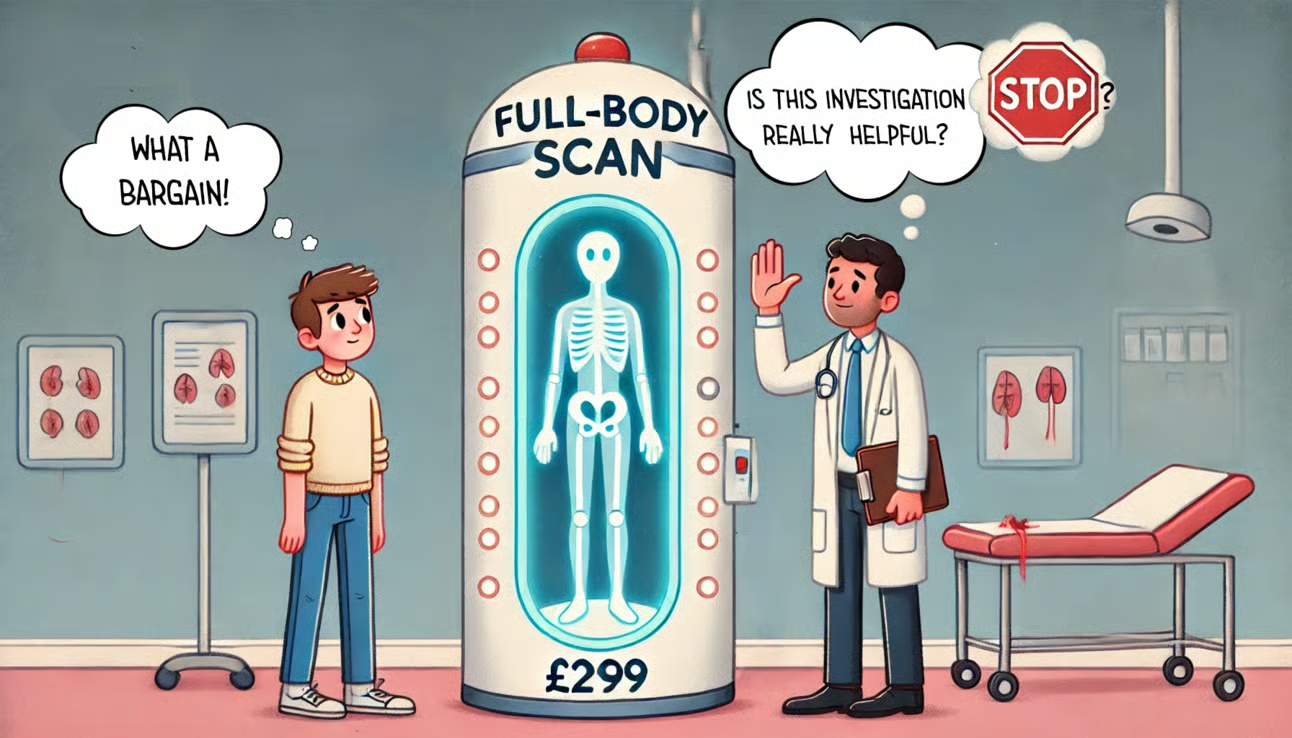
For just £299 and 1 hour of your time, The AI-powered start-up Neko Health is offering a full body ‘scan’ as a preventative health check as prevention is better than a cure. However here’s the issue: when it comes to screening tests, sometimes prevention gives you a one-way ticket to unnecessary procedures, worry and even harm.
Enter the world of false positives. Every test has a false positive rate when it says “hey, something is wrong“ when it’s not. This can trigger unnecessary fear, more tests, and even risky surgeries for patients who don’t need them.
False positives are less common when someone has actual symptoms— what those in the business of statistics call a higher “pretest probability”. That’s why we don’t recommend constant, random scanning, apart from the obvious cost implications.
Consider the classic example, a PSA test for an 85-year-old. The odds are that it’ll come back high, leading to panic. Then a biopsy, (bringing an infection risk), which might diagnose a low-risk prostate cancer—unlikely to be fatal. Despite your advice to watch and wait, the patient wants radiation and hormone therapy, which causes fatigue, and erectile dysfunction. Radiation adds bloody urine and incontinence. He ends up in the ED, with sepsis from a UTI. All starting with an inappropriate screening test.
This isn’t rare. Because of the size of the populations involved, it happens with every screening test. So, before your patients rush for that shiny full-body scan, remind them that sometimes, avoiding unnecessary tests is actually the best way to avoid harm.
Weekly Prescription
Parcel Panic: Will the NHS Embrace the 21st Century?
In 2020, it was reported that the NHS sent out around 200 million letters annually…
With the average cost of a second-class stamp at 75p, that is £150 million on postage. Add in paper, printing and handling costs, you are looking at an impressive number. All for a letter that most patients won’t even glance at before it’s banished to the kitchen counter (aka the letter graveyard).
Unless a patient specifically requests to be contacted via letter, why is the NHS still obsessed with mail? Not only could this money be used for a better purpose, but it avoids the ‘sorry, I never got my letter’ excuse. Because let’s be real – nowadays who forgets their phone for more than an hour.
Why Intentions Matter: The Grey Area of Research Misconduct
Exploring the importance of intentionality when it comes to integrity in research
A recent eye-opener from the UK Research Integrity Office (UKRIO) highlighted something worth reflecting on: the UK has no explicit laws governing research ethics. Instead, academia relies on researchers to self-regulate—essentially asking them to point out their own mistakes. Easy, right? Not quite. The UKRIO is now calling for better education on what research misconduct actually involves. But what do terms like fabrication, falsification, and plagiarism really entail?
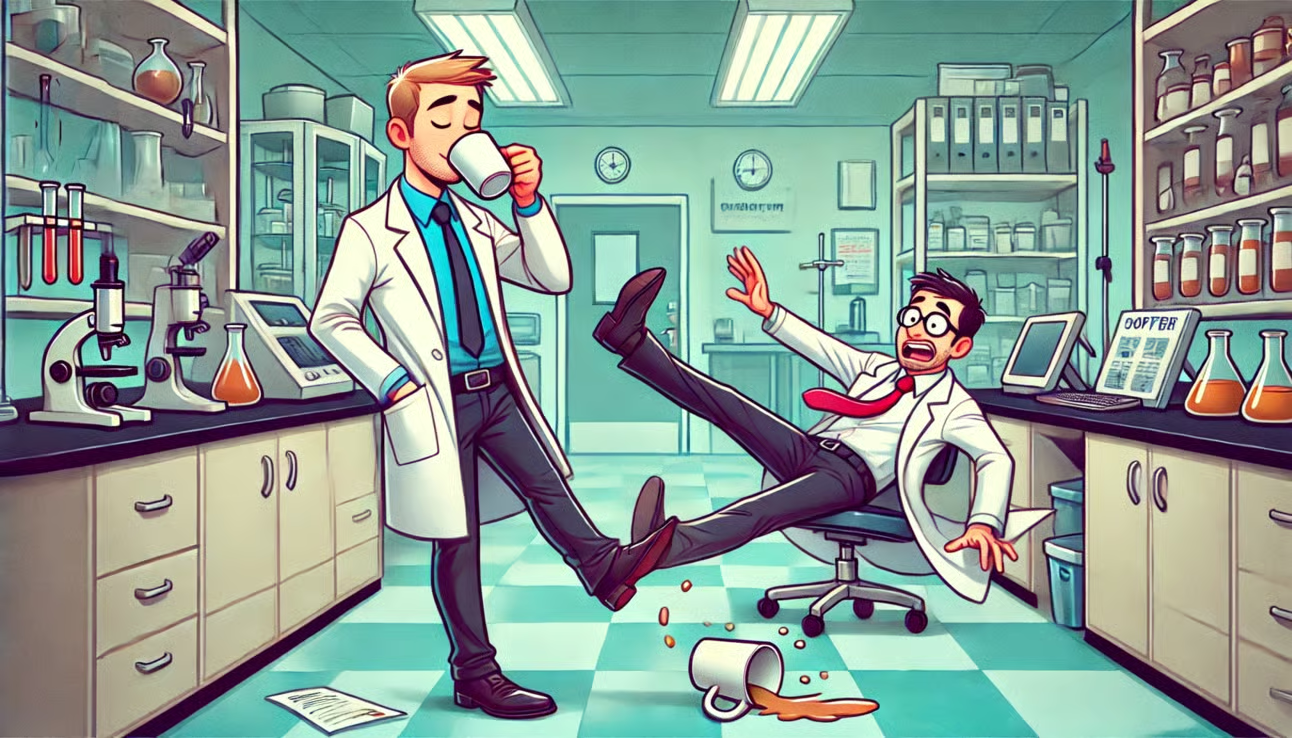
Imagine you trip over someone’s leg, stretched out innocently while they sip a cappuccino and you end up on the floor, now wearing that cappuccino. Annoying, but no harm intended. Now, if that leg was strategically placed to send you flying, you’d be much more than annoyed—you’d have a real grievance. The difference? Intent. The same logic applies to research: misconduct isn’t just about errors or bad outcomes, it’s about deliberate action. But intent is hard to prove, making this tricky territory.
In the Netherlands, they’ve embraced this complexity, acknowledging “shades of grey” when investigating research misconduct. They apply specific criteria to assess the severity of breaches, recognising it’s not always black and white. Their research suggests that around 4% of cases involve self-reported fabrication or falsification—though that number is likely underreported. Worse yet, many researchers admit to engaging in questionable practices regularly.
So, before taking every study at face value, remember: not all research is as squeaky-clean as it seems.
Board Round
A round-up of what’s on doctors’ minds
“Infectious Disease. The speciality everyone calls when nobody has the answer.”
“When I started dating my non-medical partner and told him I was anaesthetics/ICU, his response was “Oh aren’t you guys like the rockstars of the hospital?”
“How depressing is it to be asked to remove your wrist watch whilst an alpaca floats around the ward”
Referrals
Some things to review when you’re off the ward…
Weekly Poll
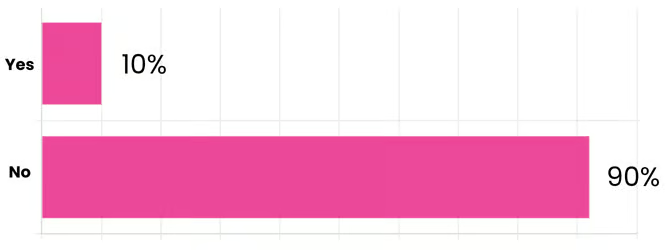
Should a 4-year medical degree be the new standard?
…and whilst you’re here, can we please take a quick history from you?
STAT Note
A Journal Joke…
We are pleased to inform you that the review of your paper, which has been under consideration for approximately 11 months, is now complete.
Enclosed you will find the proof of your paper. Kindly review it carefully and submit any corrections or feedback within 48 hours. Your timely response will help ensure a smooth and prompt publication process.
Thank you for your attention.
Sincerely,
Your friendly local journal
Share the News. Build the Community.
Help us build a community for doctors like you. Subscribe & Share On-Call News with a friend or colleague!
*We’ve done our best to keep this information accurate, but person specifications can change. Always check the latest person specification for your training programme before relying on this information.
Disclaimer:
Content in the On Call Newsletter reflects the personal views of individual authors and does not represent the views, policies or guidance of Medset Ltd. Articles are for general information only and do not constitute clinical or professional advice. Medset Ltd accepts no liability for decisions made based on this content.