PAs in General Practice: Why the Double Standard?
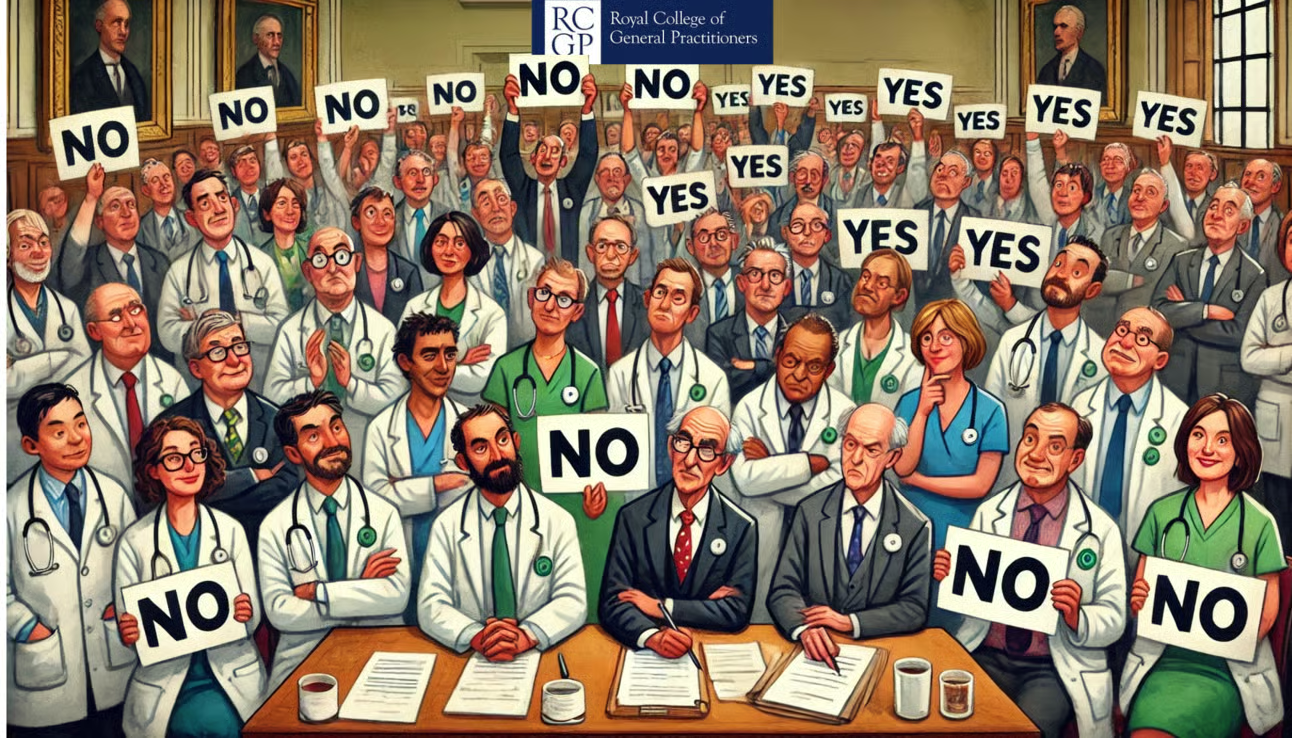
RCGP Votes No to PAs, but the Double Standard Dilemma Remains
On September 20th, 2024, the RCGP’s governing council voted: 61% opposed Physician Associates (PAs) working in general practice, 31% supported them, and 8% stayed out of it, abstaining with a cuppa in hand. With over 2,000 PAs already employed in GP practices, this has raised more than a few eyebrows. The RCGP has issued guidance to support those practices, but many doctors want more concrete answers.
But here’s the dilemma: PAs with a two-year Master’s degree are currently seeing patients independently. Meanwhile, a medical registrar—with 4-6 years of medical school, 2 years of foundational training, 3 years of internal medicine training, and the MRCP exam all under their belt isn’t permitted to fill GP rota gaps.
Supervision or not, it’s a “no” for them, despite the obvious difference in experience. Some may say this is rightly so, because GP work isn’t just about deciphering symptoms, it’s a different speciality with its own unique challenges. Fair point, but a glaring contradiction remains.
How is it that a PA is allowed to manage undifferentiated patients, while a fully qualified medical doctor with extensive training is deemed “unsafe” for GP work, even with supervision?
It feels like a paradox: experienced doctors are being sidelined whilst PAs are given the green light – this double standard just doesn’t seem to make much sense…
The RCGP promises support for practices with PAs, but the debate continues. So for now, doctors are left waiting for answers.
Weekly Prescription
A 2021 YouGov poll confirms what we’ve always known: doctors and scientists top the list of most respected professions globally. But in today’s NHS climate of endless clinics, paperwork, and the ever-elusive “lunch break”, it’s easy to forget this.
Though the work is tough and your coffee may be cold again, our profession is still tied to intellect, prestige, and societal contribution. So, when the demands stretch us thin, take a deep breath, and remember: we still have society’s trust and respect. And let’s be honest, they’ll always need us to explain why Google is not a great diagnostic tool.
The Collateral Damage of Rudeness in the Workplace
The effects of workplace hostilities go way beyond their intended target…
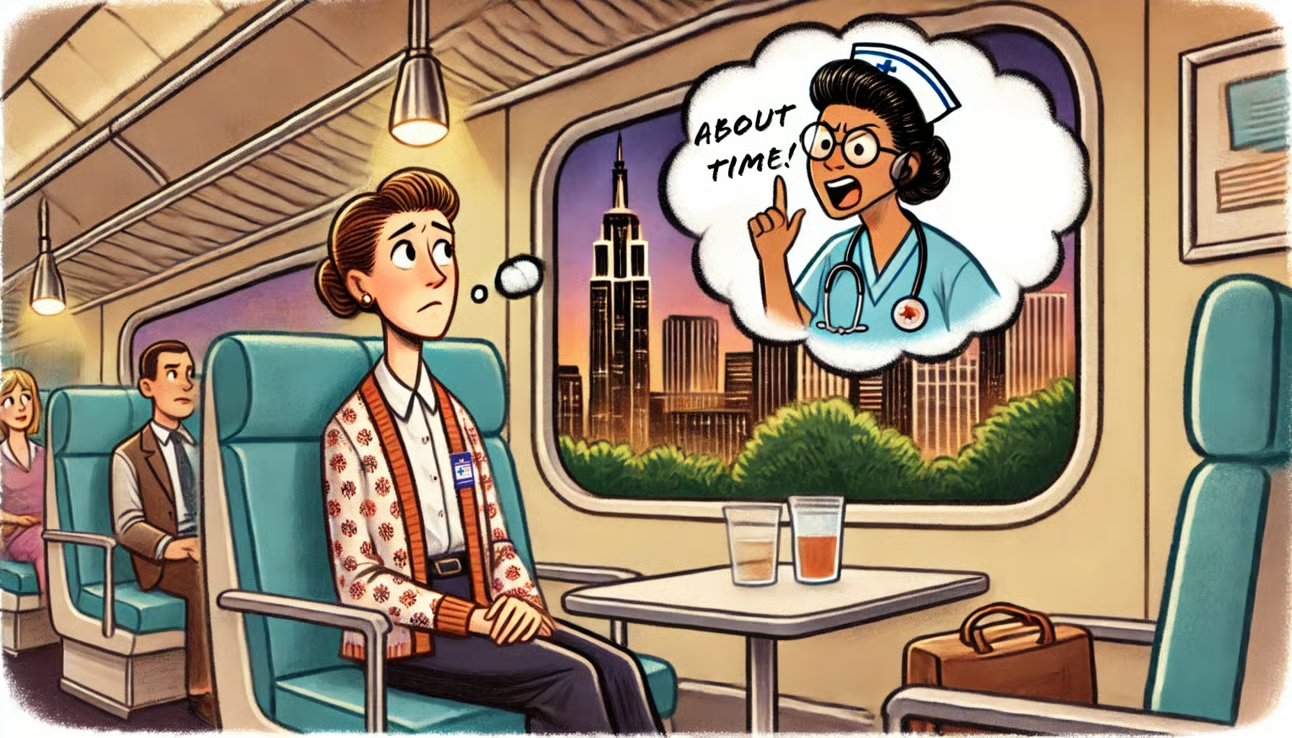
You finally find the time to gather the equipment for that cannula in bed 24. It’s the fourth cannula of the morning, because why would the universe space these things out? As you emerge from the supply room, you hear it— “Finally found the time to do some work, did she?”
You turn around but, like a sitcom, all heads are down or staring at computer screens. That snide remark sticks with you, and before you know it, you’re replaying it all day long, questioning every move. It tags along with you on the commute home, like an unwanted guest, and in the evening it even festers in your mind as your head lays on your pillow.
New research shows that when someone is directly rude to us, up to 80% of us will lose valuable time thinking about it. 38% will inadvertently reduce the quality of our subsequent output. Most of our On-Call community may have already known this.
But did you know that if one witnesses someone being rude to another person, not only will our own performance decrease by 20%, but we are also 50% less likely to help others around us? So the impact of incivility is not only felt by the victim, but by the whole team.
Board Round
A round-up of what’s on doctors’ minds
“How has medicine changed you” “My sense of humour has become pitch-black. Like, darker than the deepest pits of hell. I laugh at things I shouldn’t laugh at.”
“Yes. When I locumed at my own pace and didn’t have to deal with portfolio and all that nonsense, work did indeed feel like a hobby.”
“Best song you’ve ever heard during a caesarean.” “The Lion King ‘Circle of Life’ during a gender reveal over the drapes. Everyone loves a simba moment”.
Referrals
Some things to review when you’re off the ward…
Weekly Poll
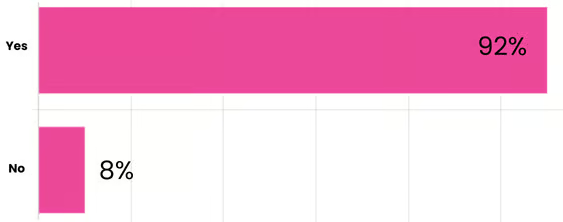
Would you be prepared to re-enter a pay dispute in April 2025 if doctors’ pay remains below 2008 levels (inflation-adjusted)?
…and whilst you’re here, can we please take a quick history from you?
STAT Note
Clinical Error Prevention: Handwritten Labels or Just Hand-waving?
So they say handwriting on blood transfusion bottles reduces clinical errors. But are we able to ask for the empirical evidence behind this claim? Because the on-call community—between their caffeine-fueled bleary eyes and sleep-deprived brains—would love to hear it.
In theory, we’re told handwritten labels are personal, carefully done, and minimise errors. Even if there is a rock-solid argument floating around somewhere let’s ask the question: Does it outweigh the risks of delays in care when your second bottle gets rejected by the lab, not to mention the smudges that can transform a surname into something Picasso might admire?
Can we really ignore the fact that printed labels bring a level of clarity and consistency that may just be worth the printer jam stress?
Share the News. Build the Community.
Help us build a community for doctors like you. Subscribe & Share On-Call News with a friend or colleague!
*We’ve done our best to keep this information accurate, but person specifications can change. Always check the latest person specification for your training programme before relying on this information.
Disclaimer:
Content in the On Call Newsletter reflects the personal views of individual authors and does not represent the views, policies or guidance of Medset Ltd. Articles are for general information only and do not constitute clinical or professional advice. Medset Ltd accepts no liability for decisions made based on this content.