The Gender Research Gap: Why We Know Less About Women’s Health
Historical biases, underrepresentation, and change in medical research
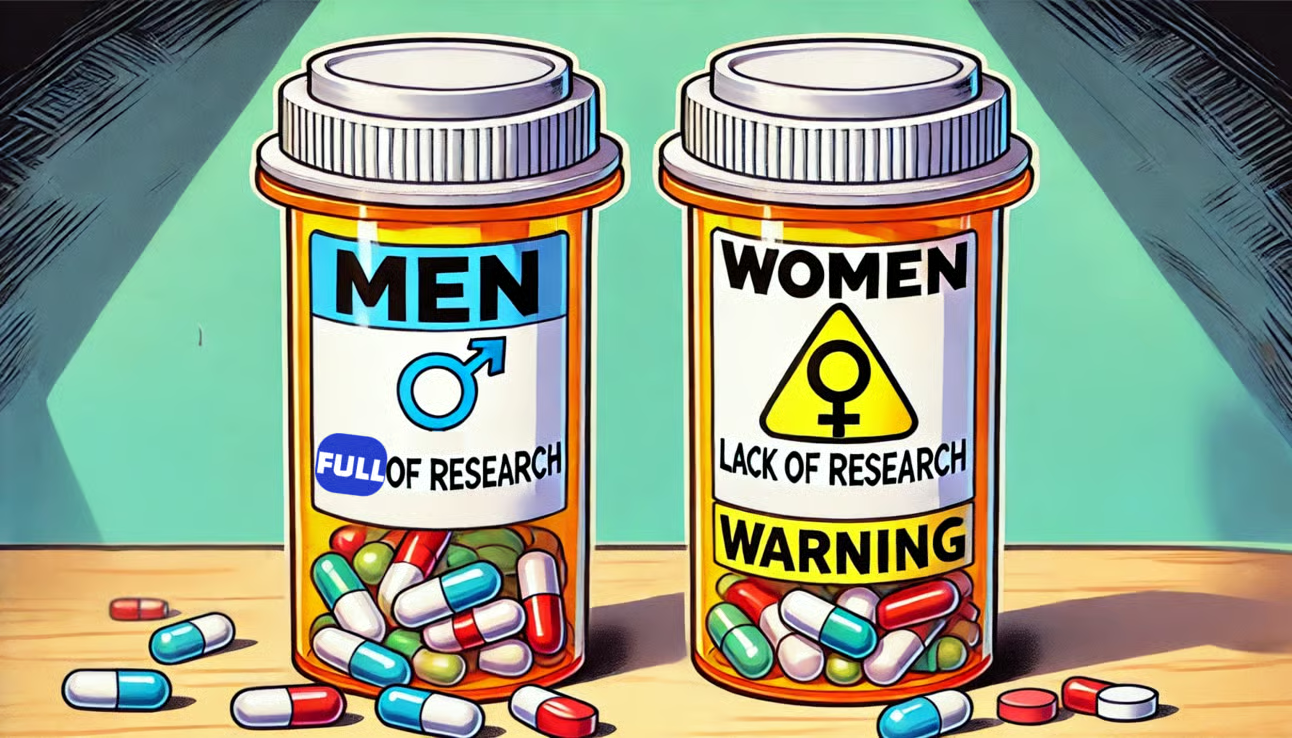
You may have pondered the long-standing question: Why do we know less about women’s health than men’s? While the answer is multifaceted, one significant factor is the historical underrepresentation of women in clinical trials.
For centuries, it was assumed that men and women were biologically similar, save for size, weight, and reproductive organs. This led to the description of women as “little men“, a notion dating back to Aristotle, who described female bodies as “mutilated males.” His influence lingered well into the Middle Ages. Fortunately, science has evolved beyond these archaic beliefs—but how much progress has truly been made?
If you’re not represented in clinical trials, then the data coming out of them won’t represent you either. Simple, right? Yet, women have long been underrepresented in medical research. One major reason? The overblown concern is that including women in studies might negatively impact their reproductive potential.
A 2022 study examined over 300 randomised controlled trials and found that, on average, only 41% of participants were women. In nearly every medical field, except for immune system diseases (where women made up 68% of participants, aligning with their higher rates of autoimmune disorders), inclusion rates were below 50%. This gender disparity is especially problematic in areas such as cardiovascular research, where symptoms and drug metabolism can differ starkly between men and women, yet treatment protocols continue to be male-centred.
The consequences? A medical system that’s effectively running beta tests on women post-approval. Women, for example, are more likely to experience adverse drug reactions than men, yet remain understudied in pharmacological research.
Thankfully, we know that more people are finally paying attention, and regulatory agencies are pushing for better representation in trials.
Weekly Prescription
NHS Work Friends on Borrowed Time
Work friendships are needed for professional well-being – according to KPMG, 78% say they boost mental health, 83% feel more engaged, and 81% are more satisfied. Yet, for NHS doctors on rotations, this foundation is built on sand. Just as bonds form, we’re tapped on the shoulder and asked to move on.
Traditional workplaces offer stability, and friendships deepen over the years. A rotational doctor’s experience could not be different as they form connections that expire on a fixed timetable. The emotional cost? Isolation. While 69% of friendless employees report loneliness, our risk is magnified: a quarter already feel this acutely, despite always being surrounded by people.
The irony? The NHS relies on teamwork, yet its system creates fragmentation. So, what’s the fix? We either armour up emotionally, treat colleagues as disposable, or embrace these temporary friendships. Perhaps the answer isn’t permanence but a mindset shift—learning to value connection, even when it’s temporary.
From Riches to Rags: Breaking the Three-Generation Curse
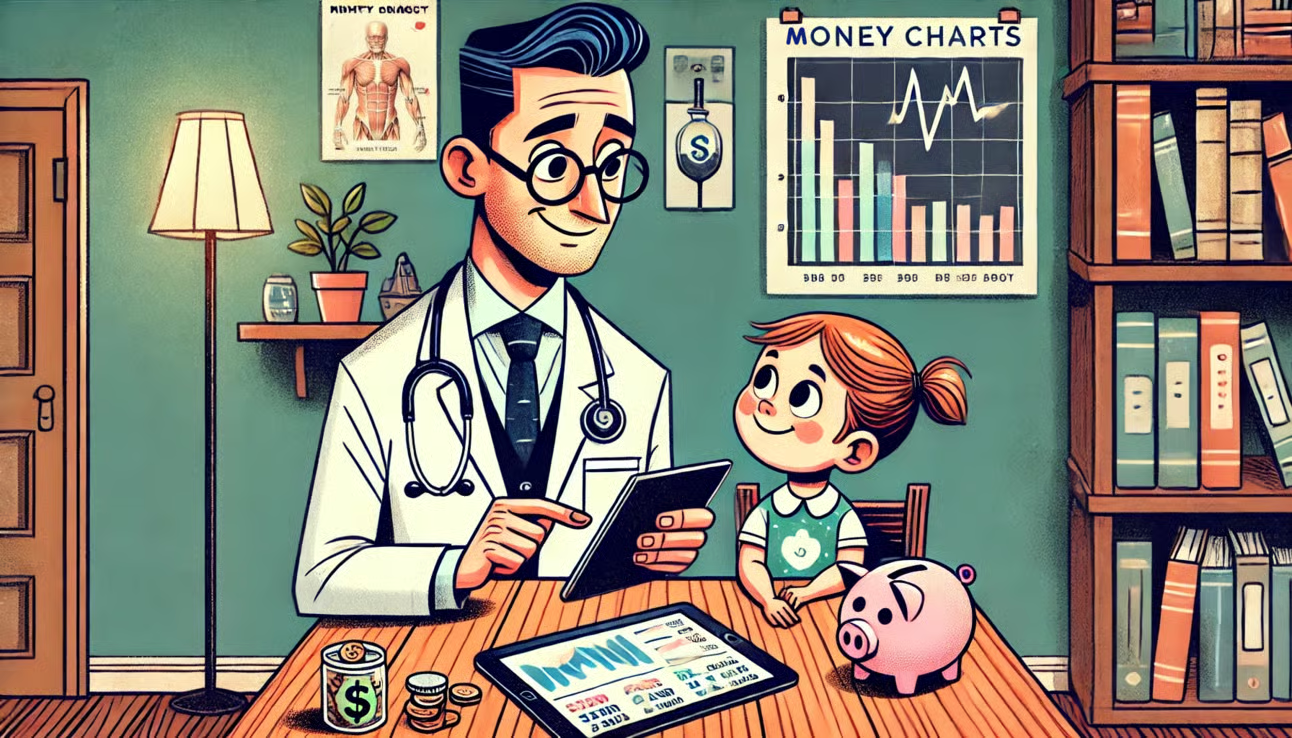
Why the best inheritance may be financial literacy
There’s an old Chinese proverb that says, “Wealth does not last beyond three generations.” It sounds like a fable designed to instil work ethic, but modern financial research suggests that it may be true. A 20-year study by the Williams Group, analysing over 3,200 families, found that 70% lose their fortune by the second generation, and 90% by the third. The decline isn’t luck—it follows a predictable pattern rooted in human psychology and inheritance dynamics.
The journey to consultant status is long and gruelling, demanding years of sacrifice and relentless dedication. The wealth accumulated is not just financial—it represents decades of effort and strategic decision-making. And yet, without careful planning, that wealth could evaporate within two generations, not because of economic forces alone but because of the inherent flaws in how wealth is passed down.
The first generation—the wealth creators—understand scarcity and struggle. They know the value of money because they have fought for it. Their children, the second generation, inherit comfort rather than hardship. They may manage wealth adequately, but they rarely expand it. By the third generation, the link between effort and reward has often been severed entirely. Without the experience of building wealth, they see it as a resource to be used, not preserved.
This cycle isn’t fate; it’s a fundamental flaw in how wealth is passed down. The assumption that money alone is an asset ignores that financial literacy is the true inheritance. Many consultants set up Junior ISAs, trust funds, and property portfolios for their children, but these safeguards mean little without financial education. A trust can dictate when money is accessed, but it cannot ensure it is spent wisely.
The issue is exacerbated by modern economics. The cost of property, education, and childcare has skyrocketed, making younger generations more financially dependent than ever. We are seeing a passive reliance on inherited wealth more than ever in our society.
It is for this reason that it is said that the best inheritance comes with guidance. Medicine is a lifelong discipline and no Consultant expects their resident doctor to master the profession with no training, the same should be true of financial literacy and their children.
Board Round
A round-up of what’s on doctors’ minds
“Best advice I got was to dress for your speciality. Surgeon? fully scrubbed. Neurology? bow tie. Paeds? shark costume. Mind you I’m still unemployed”
“I was presenting a poster at a conference when someone approached me. We spoke, and after our chat, I asked his name, which was hard to pronounce. I was struggling, and I eventually asked how it was spelt. He pointed to the first author on my poster and said, “Like that.”
“I was at the end of a 10-day OnCall and got referred a pt from ed nurse “Yeah I’ll come and see them, love you bye! – Up there with calling the teacher, Mum”
Referrals
Some things to review when you’re off the ward…
Where are we with ‘simple’ blood tests that can screen for multiple cancers? Read from Thomas Callender and colleagues in the BMJ.
Read up on Wes Streeting’s plan to axe thousands of ‘duplicate’ jobs in the NHS in an attempt to increase efficiency and cut back on costs.
Weekly Poll
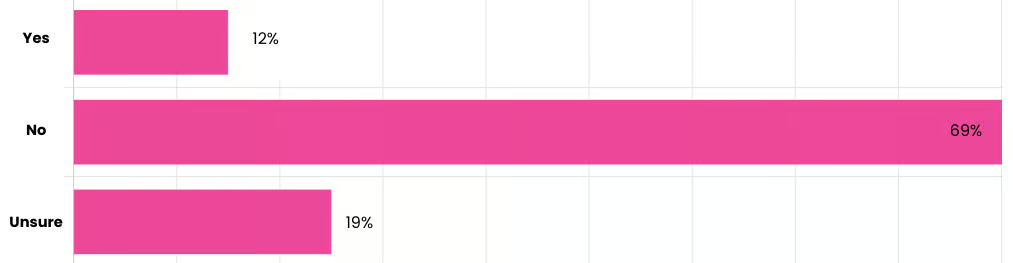
Should the GMC be responsible for monitoring doctors’ online behaviour?
…and whilst you’re here, can we please take a quick history from you?
STAT Note
Mr. Al Bumin’s Brutal Insurance Awakening
Mr. Al Bumin isn’t happy. Every morning, he watches the NHS unravel on the news, his faith crumbling like the opinion polls. At 55, with arthritis and diabetes, he decides to seek private health insurance and opens up Bupa on his laptop.
He reads on, and it suddenly becomes apparent that the premium buys less than he thought. Most policies won’t touch pre-existing conditions that you suffered from before you purchased the policy, ongoing chronic illnesses with no definitive cure like diabetes or arthritis, emergency treatment, or even, ironically, life events themselves—pregnancy, menopause, and ageing are all conveniently not their problem. Some plans do cover long-term cancer and mental health treatment but at even higher prices.
The lesson? Private insurance isn’t a magic fix. It’s a carefully worded exercise in selective coverage. And for many, the NHS—flaws and all—remains the only truly comprehensive healthcare plan. Just with longer wait times.
Share the News. Build the Community.
Help us build a community for doctors like you. Subscribe & Share On-Call News with a friend or colleague!
*We’ve done our best to keep this information accurate, but person specifications can change. Always check the latest person specification for your training programme before relying on this information.
Disclaimer:
Content in the On Call Newsletter reflects the personal views of individual authors and does not represent the views, policies or guidance of Medset Ltd. Articles are for general information only and do not constitute clinical or professional advice. Medset Ltd accepts no liability for decisions made based on this content.