Physician Associates: Solution or Just Another NHS Experiment?
Prof Greenhalgh brings some much-needed research to the table…
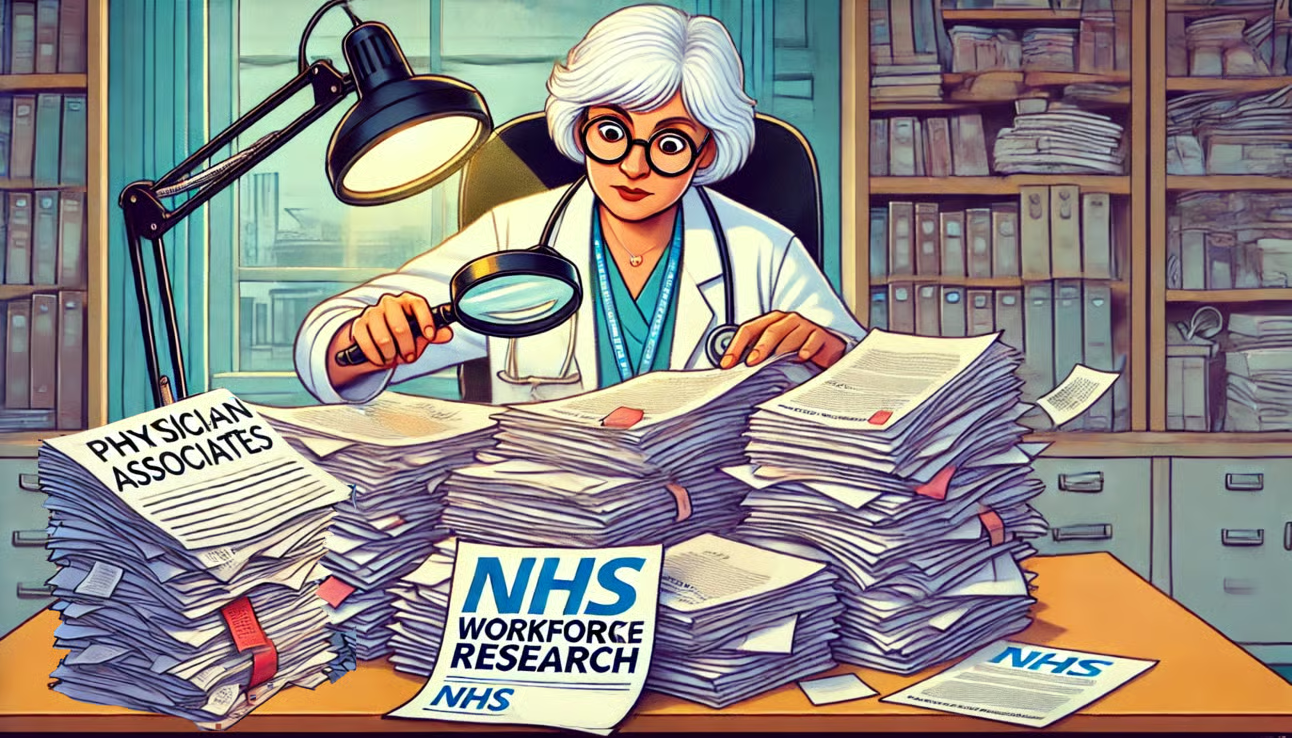
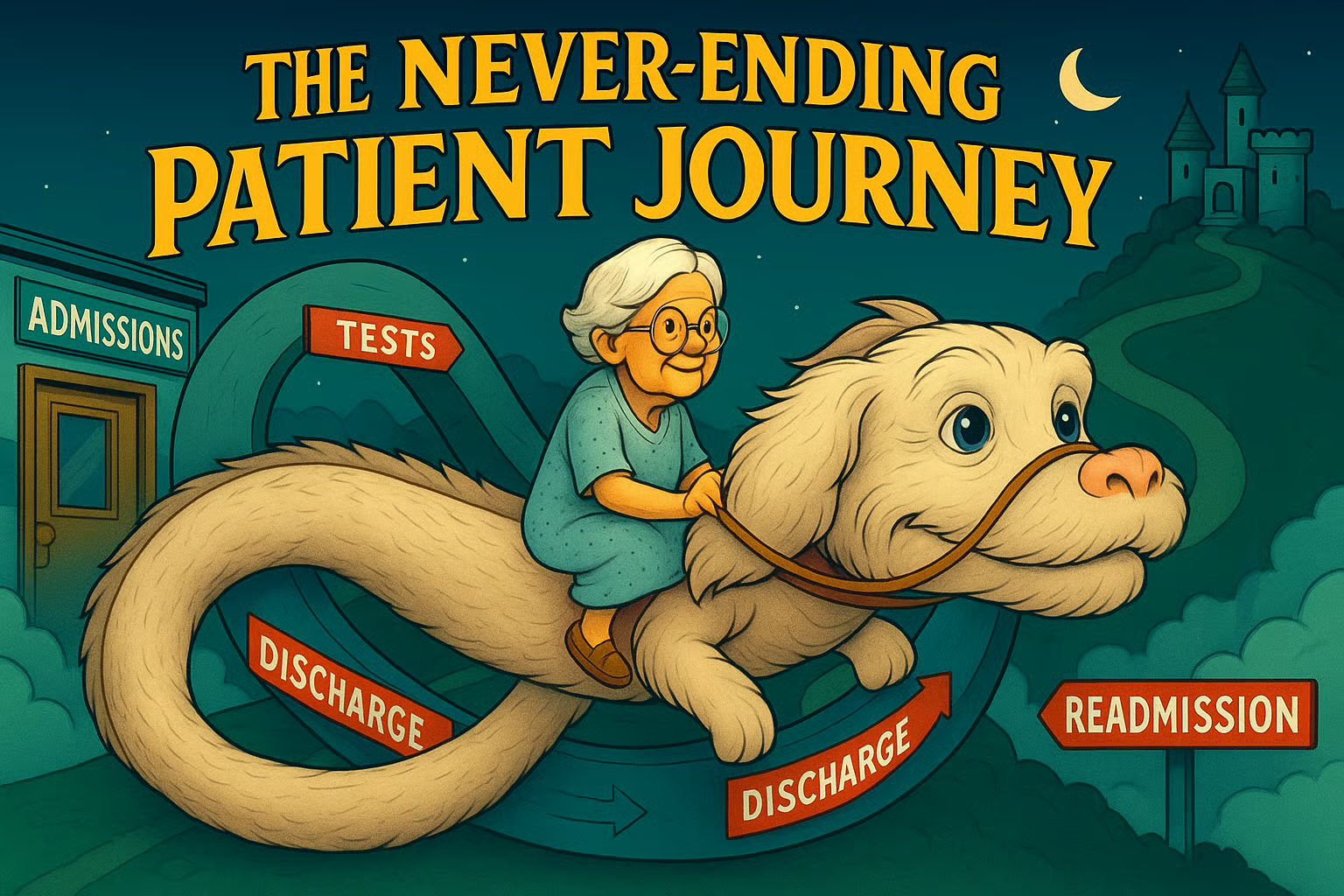
By now, most doctors have heard Physician Associate (PA) or Anaesthetic Associate (AA) taking headlines, and if you haven’t yet, where have you been? The government is pushing them as part of the solution to the NHS workforce crisis, but what do we actually know about their impact? A new rapid systematic review by Professor Trisha Greenhalgh from the University of Oxford has taken a deep dive into the data (or lack thereof), and the results are… let’s say, enlightening.
Greenhalgh trawled through three medical databases and analysed UK studies from 2015 to 2025, finding that PAs take longer than doctors to see less complicated patients. Worse, they order significantly more X-rays—in one study, 50.6% of PA patients had X-rays compared to just 17.7% of those seen by doctors. That’s a lot of extra radiation and false positive findings for no clear reason.
And do they save money? Well, nobody knows, because cost-effectiveness is notoriously difficult to calculate. A study in general practice suggested PAs were 18% cheaper per consultation than GPs, but that study didn’t factor in the cost of supervision—a rather important oversight. If senior doctors spend too much time overseeing PAs, any financial benefits disappear.
Patients generally seem happy with PAs—when they realise they’ve seen one. Many don’t. The public wants transparency, yet some patients in studies assumed they were seeing a doctor. Meanwhile, PAs themselves aren’t having an easy time either. They report feeling stressed—constantly explaining their role, facing scepticism from colleagues, and being uncertain about their career path since most PAs don’t progress beyond lateral moves.
Perhaps the most concerning finding? There’s almost no research on PA safety. No randomised controlled trials, no studies tracking safety incidents, and nothing on prescribing safety. Yet policymakers assume that the lack of evidence means there’s no problem—a textbook appeal to ignorance fallacy. As Carl Sagan put it:
“Absence of evidence is not evidence of absence.”
So, should we embrace PAs? Greenhalgh suggests they could help—if given the right roles, if they’re properly supervised, and if they don’t drain time from already overworked senior doctors. Otherwise, they might just be another well-intended policy experiment that makes life harder for everyone.
Weekly Prescription
Radiology Reports & Patient Access: A New Era of Oversharing?
In 2022, the Society of Radiographers and the Royal College of Radiologists raised concerns about patients accessing imaging reports via the NHS app. While transparency is great, let’s be honest—radiology reports aren’t exactly bedtime reading. A “minor disc bulge” or “indeterminate lung nodule” might sound dramatic, but often, they mean… nothing.
Now, doctors are seeing more patients booking appointments to discuss completely normal findings. Should clinicians approve reports before release? Or do we just accept that every adrenal incidentaloma will lead to a consultation?
Patients can use their NHS app to read new entries (such as test results) in their GP records. It’s great for empowerment, but maybe not so great when patients turn up panicked about a 0.1 rise in their lymphocytes.
The debate continues, along with a surge in “Doctor, should I be worried?” appointments!
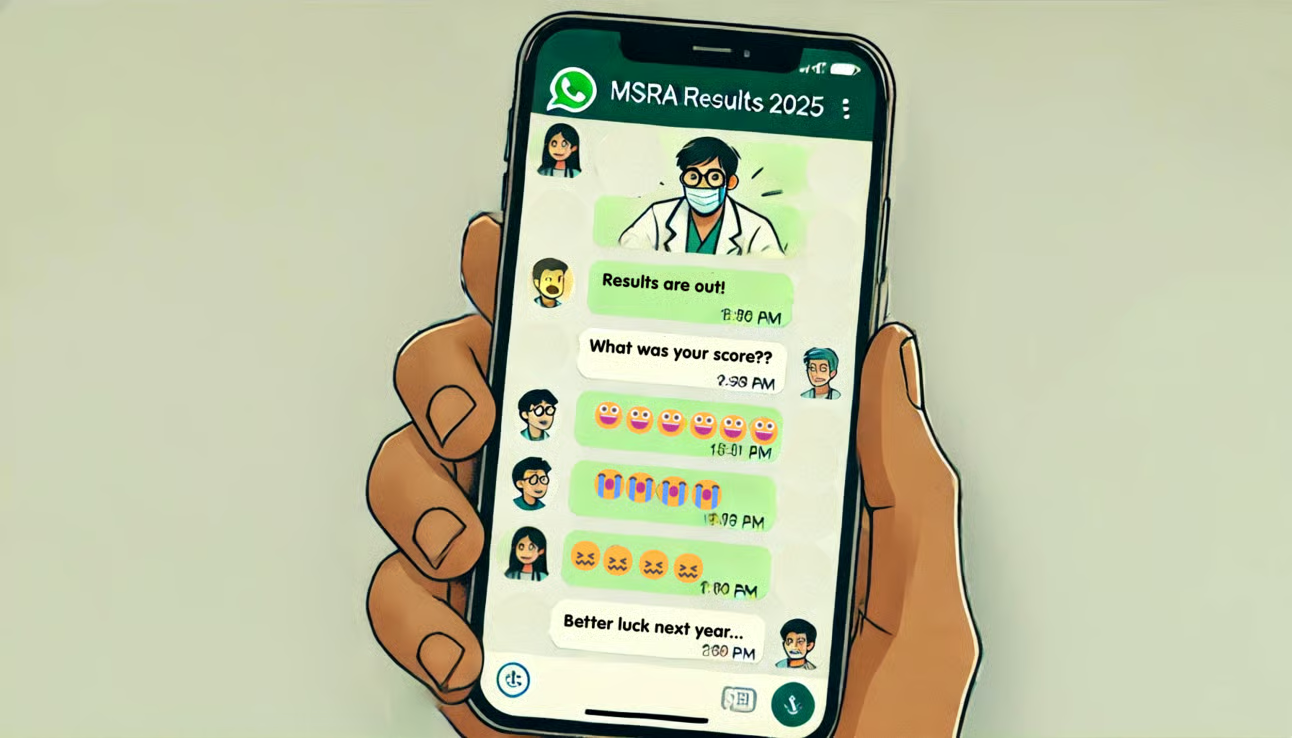
MSRA Scores Are Out—Let the Debate Begin
What Is the Professional Dilemmas Paper Really Testing?
With MSRA scores dropping into inboxes, the exam is once again the talk of the town. While the paper has two halves, it’s the Professional Dilemmas (Situational Judgement Test, or SJT) section that inevitably takes centre stage—drawing both scrutiny and scepticism.
According to Health Education England (HEE), this section aims to assess how candidates believe they should behave when faced with challenging professional dilemmas. It’s not about knowledge or problem-solving per se, but rather a test of professional attributes like integrity, coping with pressure, and empathy—qualities that (theoretically) predict success in clinical practice.
There is some evidence—though not always the most robust—that suggests the SJT correlates with training completion rates. However, much of this research comes from general practice, and its relevance to other specialities like surgery, anaesthetics, or radiology remains unclear.
HEE has a fixed budget and must distribute training numbers wisely. Every College insists that their speciality is in greater need of trainees, all while dropout rates across multiple disciplines create an ongoing headache for workforce planning. If the SJT helps predict who will actually stay the course, then perhaps it serves a purpose—but the real question is: how well does it actually do this?
Compare this to the USMLE pathway in the United States, where hyper-competitive, knowledge-heavy exams dictate speciality selection. Here in the UK, the MSRA is carrying that burden. Some argue that the more difficult knowledge-based assessments—like the MRCS for surgery, FRCR for radiology or FRCA for anaesthetics—come later in training. Yet, before you can even sit those exams, you have to get past the MSRA.
This raises an uncomfortable reality:
A candidate with an exceptional grasp of anatomy, physics, and clinical reasoning could be kept out of radiology—not because they lack technical expertise, but because they failed to rank a series of professional dilemmas in the “correct” order.
SJTs should most likely be part of selection. Those who score exceptionally poorly may indeed have valid red flags. However, if above a certain threshold, the test struggles to distinguish between candidates. If that’s the case, are we really using the right tool to select future specialists?
It’s a conversation that’s unlikely to go away any time soon. In the meantime, congratulations to those with high scores—and for those who fell short, take heart and don’t judge your situation too harshly, there’s always next year’s test…
Board Round
A round-up of what’s on doctors’ minds
“So we have our 9am handover, our 9.30am ‘huddle’, our 11am update, our 12pm board round, our 3pm second board round, and our 4.30pm handover. Now that every member of staff is fully updated on what we are doing – When do we look after our patients?”
“Annual pre-valentines day thread: 27 year old. Looking for: speciality training programme (will take anything).”
“There are many hospital trusts cutting budgets as they are all in debt and not wanting to pay for new consultants. This has particularly affected radiology in recent times. There is a radiology workforce census coming out very soon”
Referrals
Some things to review when you’re off the ward…
Want your communication to have more impact? How you speak heavily influences how you and your ideas are perceived. Learn the ‘vocal foundations of great communication’ in only 7 minutes (YouTube)
2025 is shaping up to be a volatile year. We know many of our On-Call team have investments they’re hoping will perform well. If you’re interested in market predictions for the year ahead, don’t miss this easy-to-follow conversation with Financial Times economist Katie Martin (YouTube)
No evidence that PAs add value in GP settings, finds academic review (Pulse)
Weekly Poll
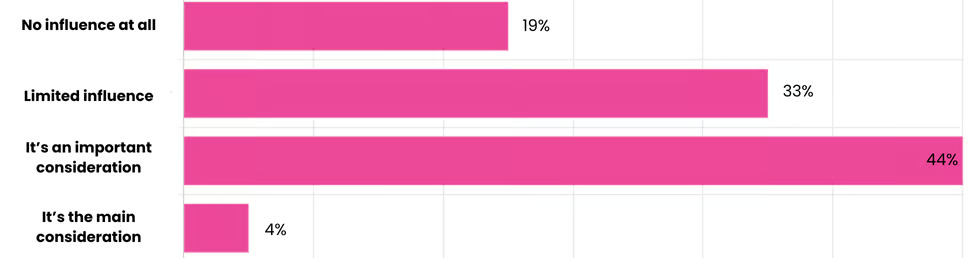
How much does the availability of private practice influence your choice of specialty?
…and whilst you’re here, can we please take a quick history from you?
STAT Note
Survivorship Bias Strikes Again
Let’s be real for a second: the competition ratios for medical positions might not look like we hoped, and yes, perhaps we deserve better. But before you throw in the stethoscope, we need to talk about survivorship bias.
Take World War II. Only planes that got hit in non-vital areas made it back, creating the illusion that planes were mostly shot in non-vital spots. The truth? The ones that got hit in critical areas never returned.
Fast forward to today, and we’re seeing the same thing. The doctors voicing their shortcomings and anger online are often the ones who didn’t get the job, while those who secured a post are much less likely to comment.
Share the News. Build the Community.
Help us build a community for doctors like you. Subscribe & Share On-Call News with a friend or colleague!
*We’ve done our best to keep this information accurate, but person specifications can change. Always check the latest person specification for your training programme before relying on this information.
Disclaimer:
Content in the On Call Newsletter reflects the personal views of individual authors and does not represent the views, policies or guidance of Medset Ltd. Articles are for general information only and do not constitute clinical or professional advice. Medset Ltd accepts no liability for decisions made based on this content.