The Slow Burn: How Burnout Creeps Up on High Achievers
If you’re questioning your career every morning, perhaps it’s time to look deeper…
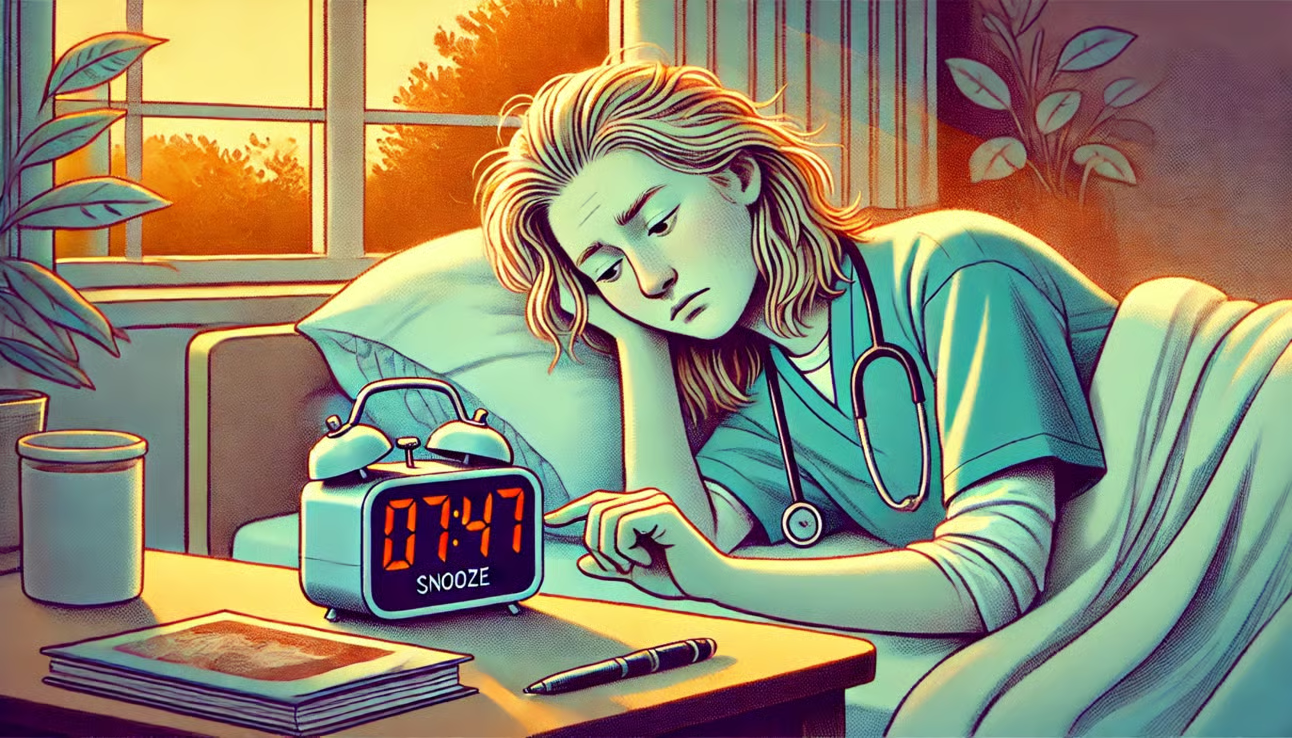
Your alarm goes off at 7:30am. You hit snooze. Your second alarm goes off at 7:37 – snoozed again. The first alarm you snoozed then goes off again at 7:40am and this cycle repeats until 7:57am when you finally tear yourself from your bed.
It’s a workday and you wonder for the 78th time what your lack of enthusiasm for the day ahead means. Is it that medicine just isn’t the career for you? Is it that your current rotation doesn’t suit you? Or are you just lazy and simply not made for the world of work?
If any of these questions sound familiar to you, could this be a sign of burnout?
For me, this is how it started. As things continued, I thought my persistent phone-scrolling before bed was just me falling into bad habits. I thought my hair breaking was due to a new shampoo I had used just one time. And I thought breaking down in tears to a song on the radio as I drove to work was just because I was tired.
It wasn’t until I began to suffer from crippling anxiety in social situations (a far cry from my former self) that I started to really consider what was wrong. I was BURNT OUT.
There’s a common misunderstanding that burnout is a sign of weakness, yet it’s typically a feature of high-performing and resilient individuals. So arguably it’s a sign of strength and those who consider themselves immune definitely need to look out for the signs.
So what are the signs of burnout?
According to ICD-11, “burnout is a syndrome conceptualised as resulting from chronic workplace stress”. In practice this means the presence of one or more of the following features:
- Feelings of tiredness or exhaustion
- Increased mental distance from your job, or feelings of negativity or cynicism related to your job
- Reduced effectiveness or productivity at work
- Physical manifestations of chronic stress (e.g. headaches, aches/pains, GI upset, and flares of underlying health conditions such as eczema, migraines or IBD)
Acute episodes can be easier to spot, but often these features develop slowly over time making them harder to recognise. So pay attention to yourself and don’t ignore the signs, because as we all know as doctors, the first step to treatment is diagnosis.
So now you know what to look out for, you can start to work out what to do about it. If this resonated with you or you have questions please don’t hesitate to send me an email (or follow my Instagram for helpful content). I’m a part-time doctor, business owner, creator & coach who helps others to navigate career doubts, overcome burnout & work towards their life goals.
Weekly Prescription
Wes’ Target Practice
What going on in the world of healthcare politics? Well the NHS is going all-in on cutting waiting times. Wes Streeting is scrapping half the targets to focus on this one big goal, leaving other priorities—like women’s health and learning disabilities—on the cutting room floor.
Wes has made this clear to NHS bosses, that he will give them more freedom in delivering, but he expects results. Hospitals must hit new benchmarks, like treating 78% of A&E patients within four hours (still far from the 95% dream). Cancer targets are tightening too, with 75% of patients starting treatment within two months.
It’s not an easy trade-off, but the stakes couldn’t be higher. Recent analysis shows A&E delays could be contributing to 1,100 deaths a week, with patients waiting over 12 hours doubling their risk of dying within a month.
Soft Words, Hard Truths: The Euphemism Treadmill
We can change the words, but the meaning always catches up…
Have you ever noticed how fast our terminology evolves? Philosophers have a fancy term for this branch of study: linguistics. Today we’re looking at euphemisms —a clever little trick where we soften expressions to make them more palatable.
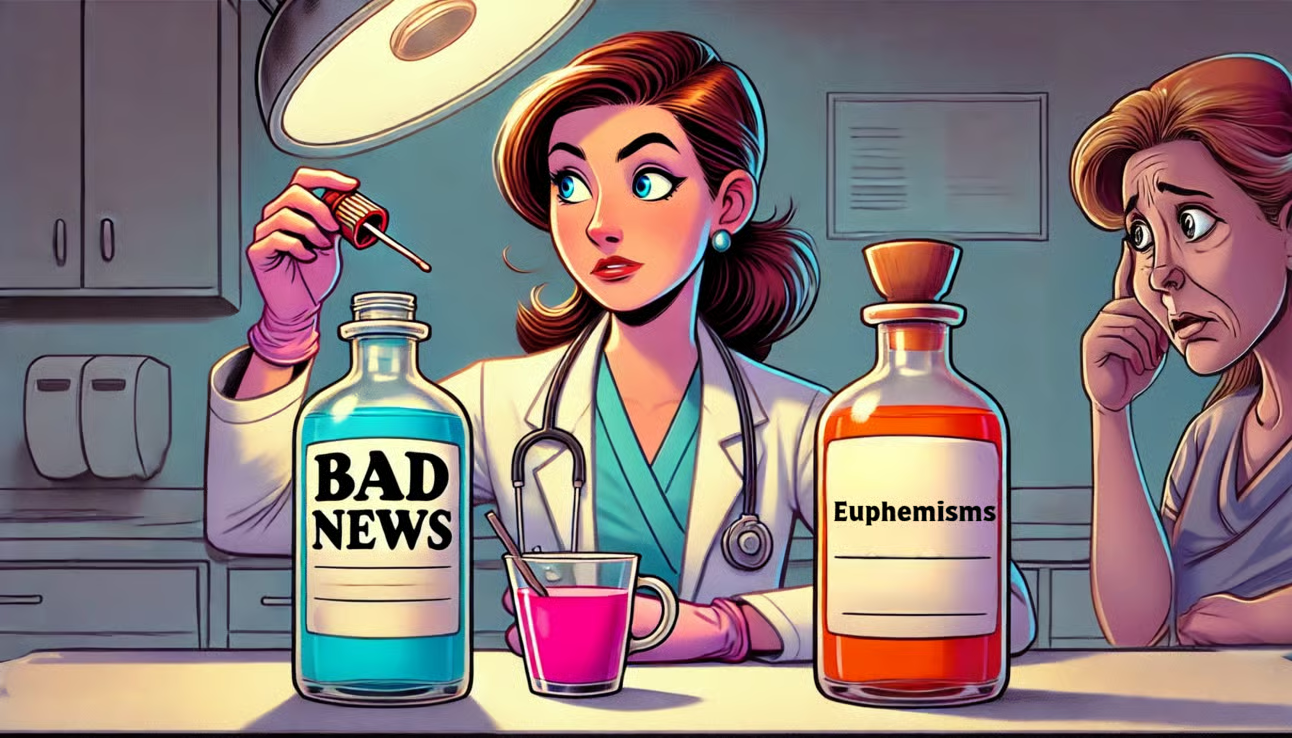
In medicine, euphemisms are our bread and butter. Cancer? Sounds scary. Call it a neoplasm or a tumour, and suddenly it’s an elegant Latin problem. Perhaps we can even prefer something gentler, like “a suspicious growth.”
And let’s not forget the creative genius of infectious disease euphemisms. Syphilis, for example, has a truly multicultural history of blame-shifting. The English called it the French disease, the French called it the Spanish disease, the Persians blamed the Turks, and the Russians passed the buck to the Poles. It’s an Olympic relay race of euphemisms, with a baton no one wants to hold.
Of course, some doctors roll their eyes at the constant name-changing. Why can’t we just stick to one word? But here’s the thing—this endless cycle might not just be an annoying quirk; it could be inevitable.
Here’s why: Euphemisms don’t stay euphemistic for long. Take “deceased,” for instance. It started as a genteel Latin term (from decessus, meaning departure) to soften the finality of ‘mortis’—you know, the “dead” word. But as people used it more, “deceased” shed its delicate cloak and became just as sombre as “Mortis.”
Stephen Pinker, the cognitive scientist, calls this the euphemism treadmill. A word starts out gentle, but the more we use it, the more it absorbs the emotional weight of its context. Before long, it’s just as heavy as the term it replaced. So, we find ourselves chasing after fresher, shinier euphemisms, thinking, This time, it’ll stick. Spoiler: It won’t.
It’s not magic; it’s somatic association. In our minds, words gain associations based on how we use them. When a term gets repeated in the same setting enough times, it becomes saturated with that setting’s emotional baggage. It’s a linguistic game of hot potato, except the potato never cools off—it just gets a name change.
These cycles are just another way of helping us process and communicate the uncomfortable.
Board Round
A round-up of what’s on doctors’ minds
“The Reddit Paradox: Happy people rarely post on online forums. Not to criticise those that do post, but in general, you have to be very burnout/sad/angry/miserable about a situation to spend the time writing out online paragraphs.”
“Cefanmet is an ancient Egyptian god that should be worshipped deservedly”
“Anyone can memorise guidelines. The difference in education between non-medical grades is shrinking rapidly without rigorous knowledge of anatomy, biochemistry, pathology etc. Spamming through passmed alone will not make you a good doctor and educators need to reflect this in the exams they create”
“Requesting CT Head ?head”
Referrals
Some things to review when you’re off the ward…
Physician associates have ‘no role’ in general practice, according to the RCGP (Pulse)
If you’re fortunate enough to have some extra cash at the end of the month, have you thought about putting it somewhere that could foster long-term passive investment growth? Take a look at this page for a beginner’s guide to passive investing, and remember the mantra of Mr Buffet – ‘Time IN the market beats TIMING the market!’
Do you ever feel the need for an online companion that gives you reliable case-specific clinical information – if so, check out the Bukumedicine website and app.
Weekly Poll
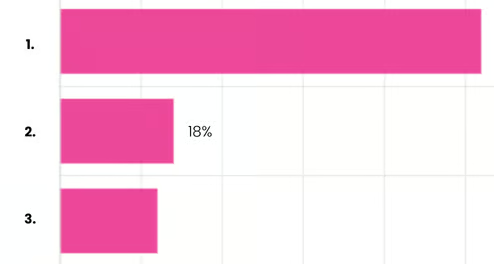
Only 18% chose the true statement:
…and whilst you’re here, can we please take a quick history from you?
STAT Note
Relax, It’s Just Your Body Being Normal
One wise doc once said the NHS should hand out more diagnoses of “a heightened perception of normal bodily function.” Truer words have never been spoken.
“Oh no, Doc! Yesterday, I didn’t poop at all, but today, I went twice! What’s wrong with me?!” Spoiler: nothing. Patients often mistake normal variations for catastrophic health issues. And while we’re here, yes, your heart beats harder after climbing stairs, and no, that’s not a heart attack. The body reacts to stimuli – influenced by hydration, diet, stress, amongst others. Explaining this to patients is an art.
As doctors, it’s a daily balancing act—validating concerns while gently explaining that sometimes, the human body just… does stuff.
Share the News. Build the Community.
Help us build a community for doctors like you. Subscribe & Share On-Call News with a friend or colleague!
*We’ve done our best to keep this information accurate, but person specifications can change. Always check the latest person specification for your training programme before relying on this information.
Disclaimer:
Content in the On Call Newsletter reflects the personal views of individual authors and does not represent the views, policies or guidance of Medset Ltd. Articles are for general information only and do not constitute clinical or professional advice. Medset Ltd accepts no liability for decisions made based on this content.