We Read The Entire 237 Page DDRB Report So You Don’t Have to
A 3 part series on the DDRB Report – Chapter 1
The On-Call team recently read the entire 2025 DDRB report. Yes, All 237 pages. As we’ve already unpacked the pay recommendations, today we’re focusing on the DDRB’s diagnosis of medicine’s current climate. The report opens by confirming some due diligence by mentioning that the DDRB team visited multiple NHS trusts and took oral evidence from doctors at all levels, and met with the BMA. The DDRB go on to assure readers that they are independent—and unafraid to disagree with both governments and unions.
The report continues by acknowledging worsening competition ratios and a mismatch between applicants and available specialty training posts (which they partly attribute to some doctors applying to multiple specialities). An area of contention was the following claim: “The evidence that UK doctors are applying for, and failing to get, a training place is weak.” They cite GMC data showing that, from 2017–2021, only 8% of FY2s didn’t receive an offer after applying in their completion year.
A fair point, but exposes itself to the obvious question of how this data has changed since 2021 – and if this data is out there somewhere, why not include it in the 2025 report? Is it really acceptable to make the case that the current situation is ‘just fine’ with data from 4 years ago?
They also highlight pressures that need no introduction: ageing population, elective backlog, fragile infrastructure. Their solution? Improved productivity through major investment in infrastructure and technology—echoing the recommendations in the Darzi report.
So the NHS and its patients remain the central focus, but if emerging tech (enter AI) can support that mission, it’ll move up the priority list, perhaps at the expense of doctors. In section 1.50, they note the Treasury has allocated departments just 2.8% for pay rises, and anything above that must come from… existing NHS budgets.
On international movement, the report mentions that a significant proportion of doctors leaving for roles abroad are non-UK nationals. But notably, around 1 in 2 UK graduates who exit the system eventually find their way back. Think of your classic F3/4 doctor enjoying the Australian sunshine for a few years.
Then there’s a quietly significant development that no one is talking about: locally employed doctors (LEDs). While often grouped under the wider medical workforce umbrella, the DDRB suggests LEDs differ from doctors in formal training pathways in a number of ways. Most notably, they mention LEDs aren’t typically subject to the same pressures from rotational training. The report makes a recommendation that while they will extend the same pay deal to them for now, they are calling for further evidence on LEDs for future reports and possibly a distinct pay framework.
Weekly Prescription
The Wild West of Talking Therapy
GPs, overwhelmed by mental health demand, are now referring patients to unregulated charities. As reported in The Guardian, one autistic girl with an eating disorder was told to self-refer to a local “therapist” — who was later discovered by the patient’s mother (who is a trained psychiatrist), to be untrained and unqualified.
Anyone can call themselves a “therapist” or “counsellor” in the UK, especially with the proliferation of quick diplomas. A recent BBC investigation found a boom in online courses, some requiring little more than a steady Wi-Fi connection.
Unlike doctors, who are tightly regulated by the GMC, therapists don’t need accreditation — and if they’re struck off from professional bodies like BACP or UKCP, they can simply rebrand and carry on. The burden of checking credentials falls on patients, often mid mental health crisis.
It’s the same story as the aesthetics industry: unregulated practice and patient harm.
A ‘Mindful’ A&E: The NHS’ New Front Line in Mental Health Care
Is this the right approach to mental health care in the UK?
Our On-Call community is no stranger to the escalating mental health crisis sweeping the UK. Year after year, diagnoses rise, and acute services struggle to keep pace. Emergency departments, already stretched thin, are the ones trying to stay afloat.
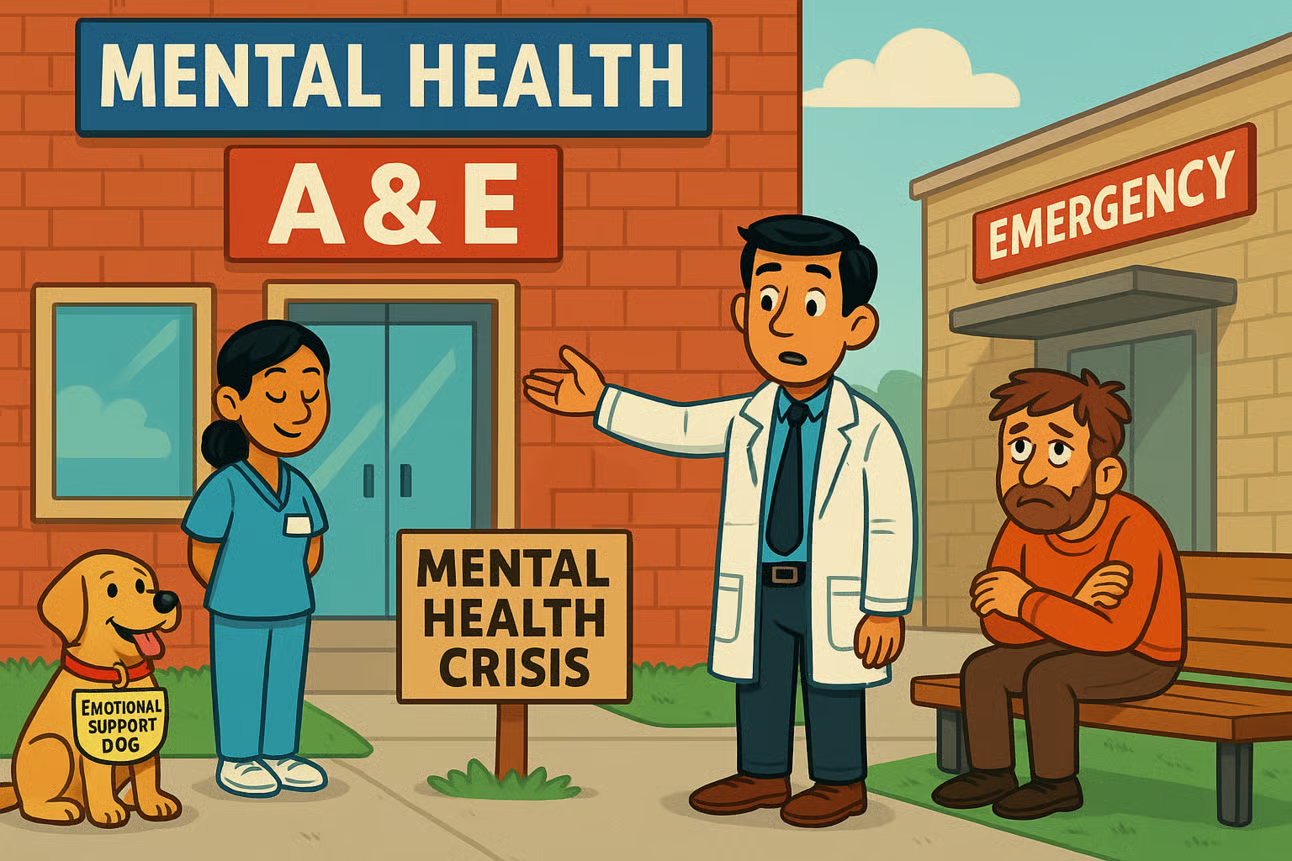
In response, the NHS is piloting a solution: a network of dedicated mental health emergency departments across England. These specialist units aim to relieve the burden on traditional A&E departments and offer tailored support to those experiencing crises from suicidal thoughts, psychosis, mania, or severe emotional distress.
These centres are staffed by trained psychiatric professionals—consultant psychiatrists, mental health nurses, and support workers. Their goal is to provide a calm, therapeutic environment far removed from the flashing lights and fast-paced atmosphere of your average A&E waiting room.
Last year alone, over 250,000 people presented to A&E departments in mental health crises with more than one-third waiting over 12 hours to be seen. NHS England’s Chief Executive noted that “Crowded emergency departments are simply not equipped to care for people in acute psychological distress.”
If you took a trip down Ladbroke Grove, you would see Central and North West London Mental Health Crisis Assessment Service, and you’ll quickly realise how different this model is. Patients are assessed within ten minutes of arrival. There is no waiting for hours with a vending machine dinner. Instead, there’s natural light, artwork, and even two “emotional support dogs,” Maxwell and Mitsi.
The centre offers three comfortable bedrooms, available for those needing an extended stay (whether voluntarily or under a Mental Health Act detention). The goal here is rapid assessment, short-term stabilisation, and discharge within days—not weeks. In contrast, a typical A&E visit can often end up with a prolonged hospital admission due to delays and missed opportunities for early intervention.
This kind of environment may also encourage more people to seek help before things hit crisis point. Traditional A&Es can be overwhelming or even re-traumatising, deterring those in mental distress from attending. With mental health-related 999 calls rising sharply, London’s Met Police recently announced they will no longer attend such calls due to resourcing pressures.
Could these crisis hubs save the NHS money by reducing costly inpatient stays? Could they help get people back to work sooner, improve public safety, and reduce pressure on emergency services? Potentially, yes. But let’s not get too carried away with wishful thinking: while these new centres are promising, they will face the same challenge as any NHS innovation—soaring demand and limited resources.
Board Round
A round-up of what’s on doctors’ minds
“The BMA’s ballot must meet a legal threshold of 50% of eligible voters to participating in the vote. Other union ballots have failed because of this”
“*unmutes mic* – nothing from my side, thanks”
“Radiology version of “this meeting could have been an email” is “this chest CT could’ve been a chest X-ray”
“In 2024, the number of applications to study medicine was 33% higher than in 2019”
“GMC data showed that in 2022 more than half the doctors who joined the workforce were trained abroad. Compare this to 2012 where only 26% of GMC registered doctors were from outside of the EU.”
Referrals
Some things to review when you’re off the ward…
A recent Royal College of Anaesthetics conference highlighted the effectiveness of mechanical thrombectomy for stroke – It saves more lives and reducing disability. Yet, 24/7 access remains limited, and only 4.3% of stroke patients receive it but it’s estimated that at least 10% of stroke patients can benefit from the procedure.
The BBC reported this week that England will be the first country to roll out a gonorrhoea vaccine, targeting mainly gay and bisexual men with a history of STIs or multiple partners. 2023 saw the highest number of gonorrhoea cases since records began in 1918.
Across 224 NHS trusts, 1,557 senior managers received a salary in the six-figures across the 2023-34 year. 279 of these managers received between £200,000 and £300,000 and 17 received more than £300,000 according to the Taxpayer alliance. This includes many who are in charge of failing NHS hospitals.
Weekly Poll
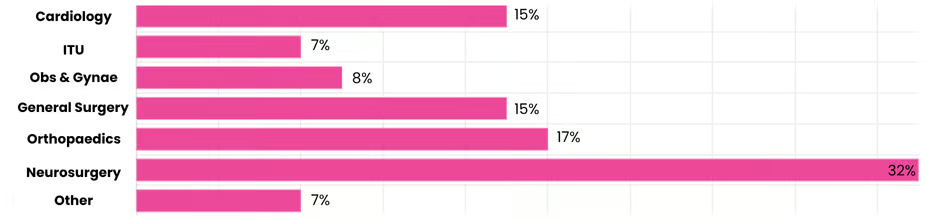
Which speciality has the worst culture for taking referrals?
…and whilst you’re here, can we please take a quick history from you?
STAT Note
Pay Cut Logic 101: The Maths Behind Pay Restoration
The BMA’s strike ballot has opened— and a new DoctorsVote graphic is causing confusion amongst the public: doctors remain 22.8% down in real terms compared to 2008. But to reverse that, a 28.7% uplift is needed.
Medics, how many of you miss your maths days? This is where base vs. percentage increase seems to be haunting members of the public. This is where we have a role explaining the numbers. A 22.8% cut means current pay is just 77.2% (i.e. 100-22.8) of what it was. To return to full value, you need to grow that smaller number back to 100 — and that takes 28.7%.
If pay dropped from £100 to £77.20, adding back 22.8% doesn’t restore it. You need nearly 30%. It’s the same reason a 50% pay cut from £100 to £50 needs a 100% raise to recover.
Some members of the public don’t get this either — most assume restoring 22.8% means adding 22.8%. It doesn’t. That gap in understanding matters.
Share the News. Build the Community.
Help us build a community for doctors like you. Subscribe & Share On-Call News with a friend or colleague!
*We’ve done our best to keep this information accurate, but person specifications can change. Always check the latest person specification for your training programme before relying on this information.
Disclaimer:
Content in the On Call Newsletter reflects the personal views of individual authors and does not represent the views, policies or guidance of Medset Ltd. Articles are for general information only and do not constitute clinical or professional advice. Medset Ltd accepts no liability for decisions made based on this content.